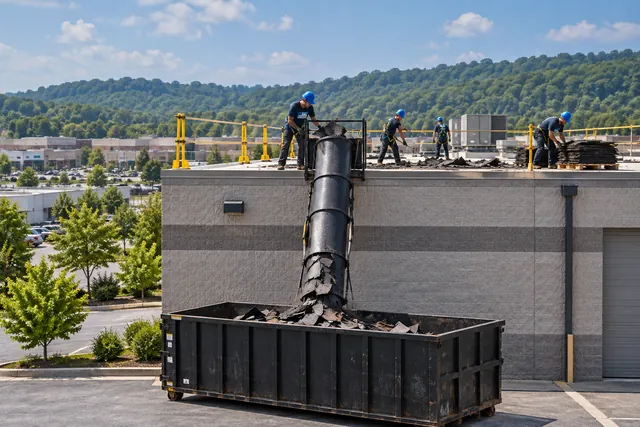
Flat Roofing
Low-slope additions and connector roofs between metal buildings, replaced or recovered with their drains rebuilt.
Flat Roofing details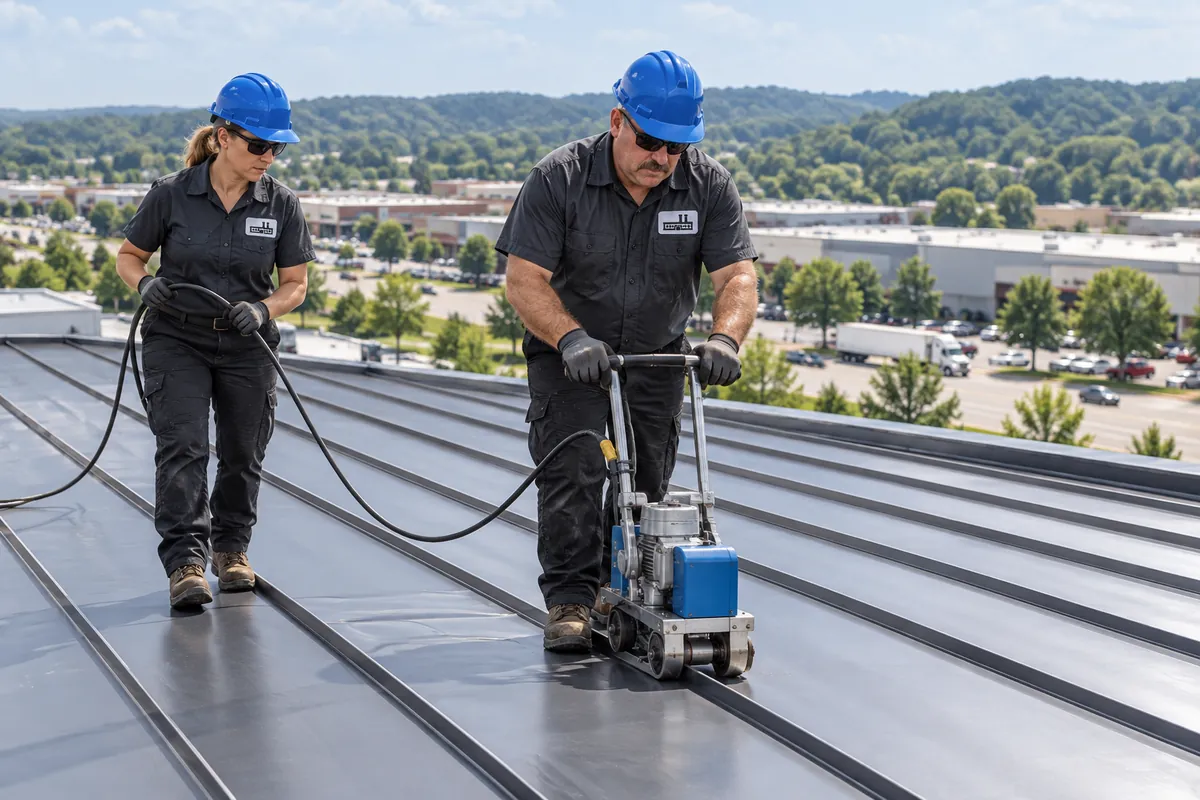
Commercial Metal Roofing · Florence, KY
As a Florence commercial metal roofing contractor, we install, repair, and maintain standing seam and R-panel roofs on shops, warehouses, plants, and offices.
A Florence commercial metal roofing contractor matches the panel to the slope and the building. These lists show when new panels make sense and when the existing roof should be repaired first.
Metal roofs tell you where they leak. The chip on each condition shows how soon it needs attention.
Heat cycling walks screws out and dries washers until they crack. Fastener rows near the eave, ridge, and end laps go first.
Old sealant shrinks and lets wind-driven rain past the lap. The fix is scraping it out, adding stitch screws, and resealing with butyl tape.
Scratches from foot traffic or hail let rust start at bare steel. Touching them up early keeps the spots from spreading under the paint.
Leaves and grit hold water against the steel and overflow into the wall. Clear gutters and downspouts keep that water moving.
Condensation forms when warm, humid air meets cold panels over thin or missing insulation. It looks like a leak but needs a vapor retarder fix.
Wind peels loose closures, trim, and ridge cap first. Refastening them before the next storm keeps a panel edge from lifting.
A well-built metal roof pays back on the roof, inside the building, and in maintenance planning.
Standing seam clips let panels slide with heat, while R-panel suits steeper shop and barn roofs that shed water fast.
Ridge cap, eave trim, and gutters in the same finish as the panels age together instead of rusting at the edges.
Faced blanket insulation with a sealed vapor retarder keeps humid air off cold steel in shops and warehouses.
Retrofit framing over a flat roof sends water to new gutters, ending leaks at old interior drains.
Spring and fall walks check fastener rows, gutters, curbs, and trim, which keeps repairs small and predictable.
PVDF paint holds color longer, SMP costs less, and Galvalume steel carries an alloy layer that resists rust.
Two panel types cover most commercial metal roofs. They differ in how they attach and where they leak.
| Factor | Standing Seam | R-Panel or PBR |
|---|---|---|
| Attachment | Concealed clips under raised seams | Screws through the panel face |
| Panel movement | Slides on clips with heat | Held tight by fasteners |
| Slope | Lower slopes allowed with the right seam | Needs more pitch to shed water |
| Leak points | Seam ends, ridge, penetrations | Screw washers, side laps, end laps |
| Usual buildings | Offices, schools, churches, retail | Shops, barns, warehouses, plants |
Each manufacturer sets the slope limit for its own panel and seam profile.
Rusted screws and laps let water in long before panels fail. Get a free estimate for fastener and lap repairs.
Get A Free EstimateThe steps on a new metal roof, a retrofit over a flat roof, or a major repair.
Every fastener row, lap, curb, and gutter is checked, and panel profile and gauge are measured. Inside, the insulation facing and the underside of the steel show condensation or rust.
Slope, building use, and budget set standing seam or R-panel, 24 or 26 gauge, and a PVDF or SMP finish. Ammonia exposure in animal buildings calls for an approved finish.
For a retrofit, light-gauge purlins and sub-framing are set over the old flat roof after an engineer checks the load. For a reroof, old panels and fasteners come off in sections.
Insulation with a sealed vapor retarder goes in, then panels, clips or screws, closures, ridge cap, and eave trim. Curbs get crickets on the upslope side.
Laps, curbs, and penetrations are sealed and checked, gutters are tested, and you get a maintenance list for spring and fall walks.
Many buildings with metal roofs also carry low-slope sections. These pages cover them.
Low-slope additions and connector roofs between metal buildings, replaced or recovered with their drains rebuilt.
Flat Roofing details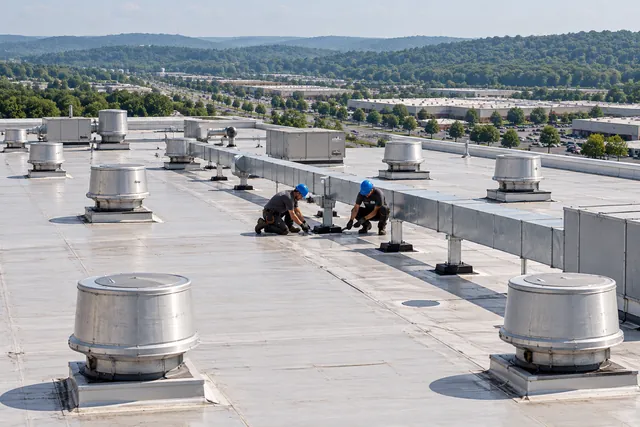
Plant roofs where process bays with metal panels sit beside membrane roofs with exhaust and joints.
Industrial Roofing details
Screw, washer, and lap repairs plus matched panel swaps on metal roofs with plenty of life left.
Commercial Roof Repair detailsThe five metal roofing questions from the owner file, answered for Florence buildings.
Two main types: standing seam, held by concealed clips under raised seams, and exposed-fastener R-panel or PBR, screwed through the face. Standing seam slides with heat and allows lower slopes with the right seam; R-panel needs more pitch. Offices, schools, and retail lean standing seam, while shops, barns, and warehouses usually carry R-panel.
Most commercial roofs use 24-gauge steel for standing seam and 26-gauge for many R-panel buildings. Galvalume steel resists rust, and PVDF paint holds color longer than SMP. Under the panels, faced blanket insulation with a sealed vapor retarder keeps warm, humid air off cold steel, which stops condensation dripping on cold mornings.
Yes, with retrofit framing. Light-gauge steel purlins and sub-framing build slope above the old membrane and bear on columns or bearing walls. Panels then shed water to new gutters, which can retire leaking interior drains. An engineer checks the added load, the space between roofs is vented, and existing units get raised or new curbs.
By replacing the small parts that seal it while the panels stay. Backed-out screws get new screws and washers, one size up in worn holes. Dented panels are swapped for the same rib profile. Laps are scraped, stitch-screwed, and resealed with butyl tape, and curb flashing is refastened with a cricket upslope.
A walk each spring and fall and after hail or high wind. Check fastener rows near the eave, ridge, and end laps; clear gutters, valleys, and downspouts; renew cracked sealant at curbs and boots; refasten lifted trim and ridge cap; and touch up scratches. A dated photo log shows which spots keep needing work before winter.
Tell us the panel type, the building, and where the leaks or rust show up. We will inspect the roof and price the metal work.