TPO Roofing
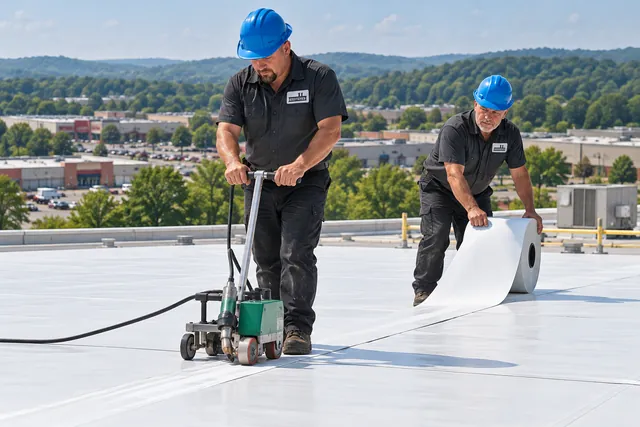
Welded white membrane for roofs where owners want heat-fused seams and a reflective surface.
TPO Roofing details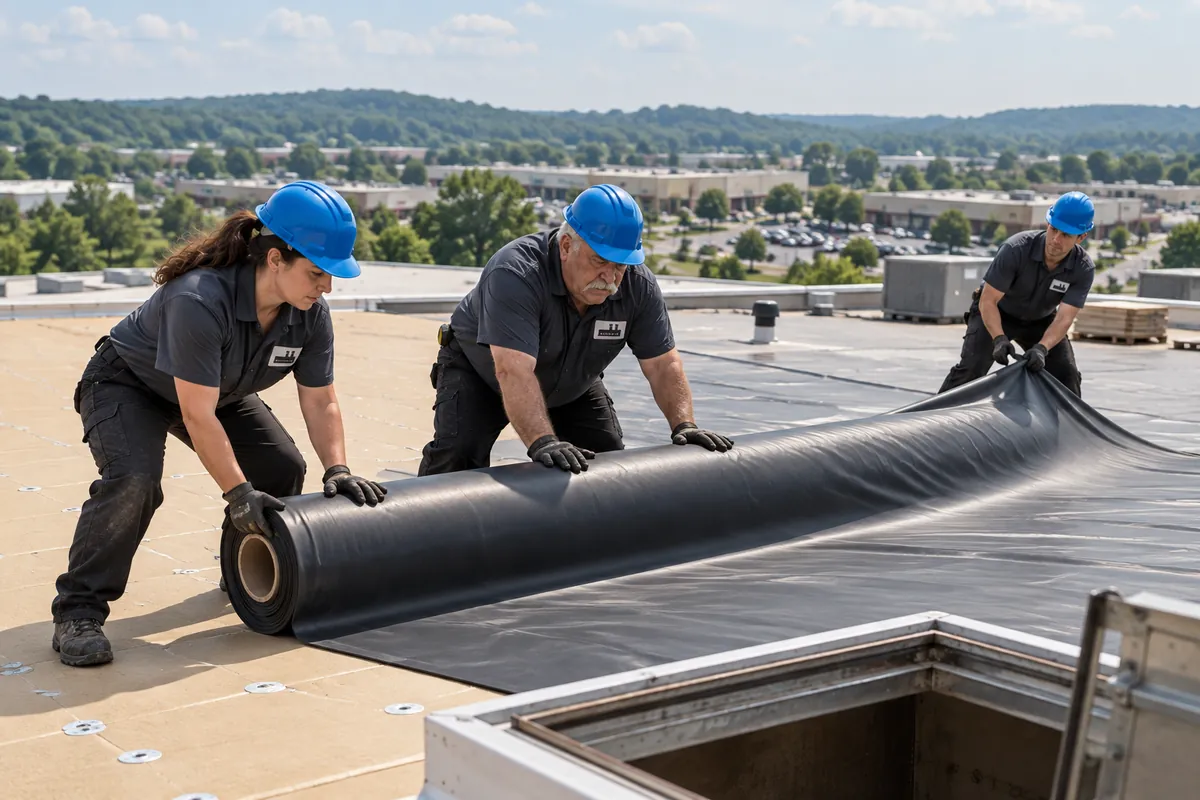
EPDM Roofing · Florence, KY
As a Florence EPDM roofing contractor, we install rubber membrane roofs with primed, taped seams on churches, schools, masonry buildings, and long warehouses.
A Florence EPDM roofing contractor looks at movement, exposure, and the existing roof before choosing rubber. These lists show where EPDM earns its place and where another sheet works better.
Aging EPDM gives clear signals. The chip on each shows whether to watch it, plan a repair, or call now.
Roofs installed with liquid splice adhesive dry out at the laps. Edges lift, dirt gets in, and water follows the open seam into the insulation.
Rubber shrinks slowly with age and heat, pulling tight across inside corners like a drumhead. Bridged flashing tears or pulls its termination bar loose.
Oxidized rubber turns chalky and must be scrubbed to fresh membrane before any new tape or patch will stick to it.
Older field-wrapped boots crack where the rubber folds. Pre-formed boots made for EPDM replace them without channels for water.
Black membrane hides ponding until the dirt ring shows. Water that sits ages the laps nearest the drain fastest.
Wind gets under a sheet that was never fastened at the edge. A securement strip and new edge metal hold the perimeter down.
Rubber roofing earns its keep in three places: on the roof surface, inside the building, and in the plan for the roof over time.
EPDM flexes with the building through freeze-thaw cycles and settling, which suits older masonry walls and long roofs.
Large sheets cover a field with only a handful of laps, so there are fewer joints for water to find.
Securement strips at the base of walls and curbs take the shrink load, so the flashing above them stays put.
White-on-black sheets reflect summer sun, while standard black suits buildings where winter heat matters more.
New EPDM can be joined to older sections with primer and tape, which helps with additions and unit swaps.
Sheets come in 45, 60, and 90 mil, so heavier rubber can go where foot traffic or hail exposure calls for it.
EPDM comes in a few forms. The table shows how each is held down and where it tends to go.
| Option | How It Goes On | Common Fit |
|---|---|---|
| Fully adhered black EPDM | Bonding adhesive across the sheet, taped seams | Churches, schools, older masonry buildings |
| Mechanically attached reinforced EPDM | Fastened in the laps with plates | Large warehouse roofs on steel decks |
| White-on-black EPDM | Adhered or fastened, white face up | Buildings that want a cooler roof surface |
| Ballasted EPDM | Loose sheet held by stone | Concrete decks rated for the weight |
| EPDM tie-in section | Primed and taped into older rubber | Additions, RTU swaps, partial reroofs |
Bridged EPDM flashing tears in the next cold snap. Get a free estimate before it does.
Get A Free EstimateThe steps on a new EPDM roof or a large tie-in section.
Cores and a moisture survey show where old rubber sits over dry insulation and where boards are soaked. Walls, curbs, and every pipe boot are checked for bridging and splits.
Wet boards come out and rusted or rotted deck sections are replaced. New insulation and a cover board go down, set to the tested attachment pattern.
EPDM rolls out and sits flat for a while so it relaxes before bonding. Each sheet is glued or fastened, then laps line up for taping.
Every lap is cleaned, primed, and closed with seam tape pressed by a roller along its full length. Cover strips go over seams at edges and termination bar.
Securement strips anchor the sheet at walls and curbs. Pre-formed corners and pipe boots replace folds, and the edge gets new metal and counterflashing.
Rubber is one choice for low-slope roofs. These systems cover the cases EPDM does not suit.
Welded white membrane for roofs where owners want heat-fused seams and a reflective surface.
TPO Roofing details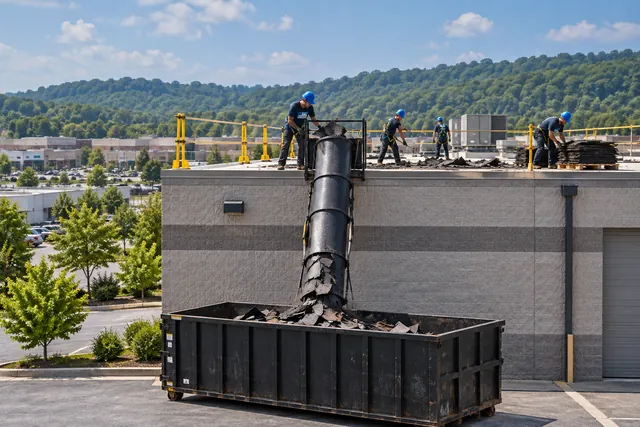
Recover and tear-off planning, drainage, and mod bit or PVC choices for any low-slope roof.
Flat Roofing details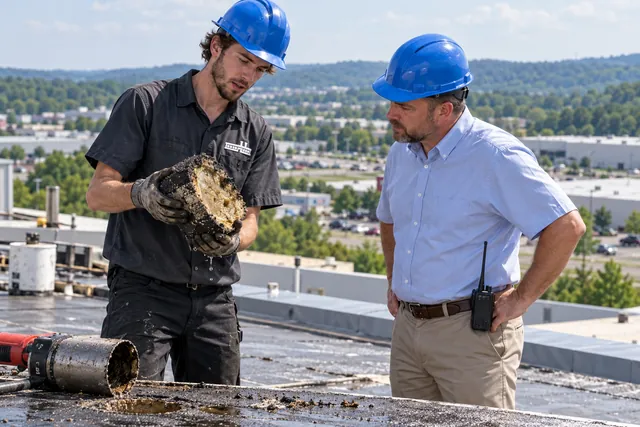
Seam tape repairs, new pipe boots, and resecured flashing for EPDM roofs with more life left in them.
Commercial Roof Repair detailsThe five EPDM questions from the owner file, answered for Florence buildings.
EPDM is a synthetic rubber membrane, usually black, sold in large sheets that cover flat and low-slope roofs with few seams. Its stretch handles freeze-thaw movement and settling, which suits older masonry buildings, churches, schools, and long warehouse roofs. Thickness runs 45, 60, or 90 mil, with reinforced sheets for fastened systems and white-on-black for a reflective surface.
Modern seams use primer and seam tape pressed into the lap with a roller, and seam quality decides how well the roof keeps water out. Older roofs used liquid splice adhesive, which dries and peels with age. Clean laps, steady roller pressure, cover strips at edges, and pre-formed corners on curbs make a seam that lasts.
Rubber shrinks slowly with age and heat, and that tension stretches the membrane where it turns up a parapet or curb. The sheet ends up spanning the corner like a drumhead, called bridging, and it tears or pulls its termination bar loose. New installs add securement strips at the base of walls to carry that load.
Black rubber absorbs more sun than a white sheet, so the surface runs hotter in summer, which matters most over thin insulation. In Northern Kentucky that summer gain trades against winter heat loss. White-on-black EPDM or more insulation are the usual answers, and the Cool Roof Rating Council directory lists tested reflectance values.
Cleaning the old rubber down to fresh membrane, priming it, and joining the sheets with seam tape. Chalky oxidation blocks adhesion until it is scrubbed off. The tie-in sits high on the slope so water flows over the lap, and if the old section has wet insulation, the tie-in moves back to the nearest dry area.
Tell us the roof size, what sits on it, and where the rubber is failing. We will inspect it and price the EPDM work.