Commercial Roof Repair
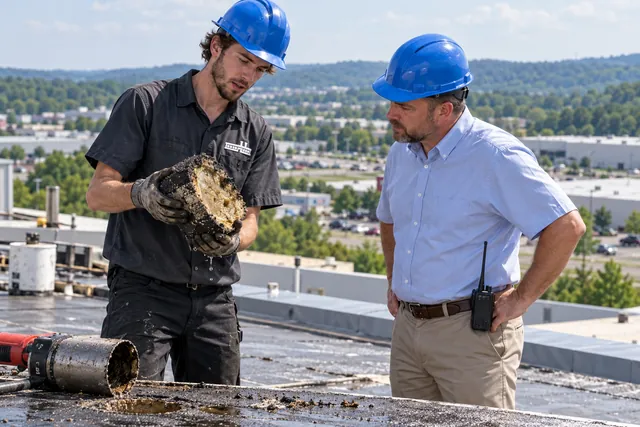
Seams, curbs, drains, and edges fixed with the same material as the roof, when the insulation around the leak is still dry.
Commercial Roof Repair details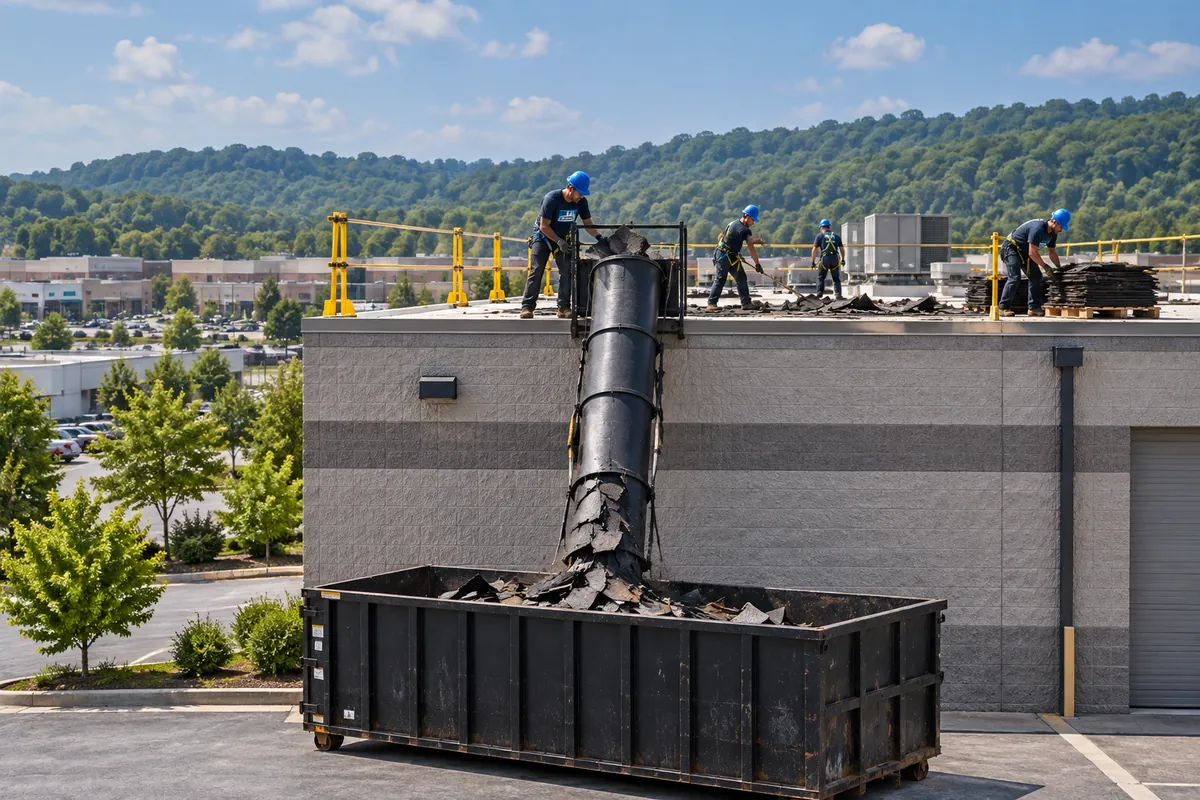
Services · Florence, KY
We offer commercial roofing services in Florence for every common business roof: leak repair, TPO, EPDM, flat roof replacement, industrial roofing, and metal.
Each of our commercial roofing services in Florence starts with a roof walk. Pick the one that matches your roof, or call and we will help sort it out.
Seams, curbs, drains, and edges fixed with the same material as the roof, when the insulation around the leak is still dry.
Commercial Roof Repair details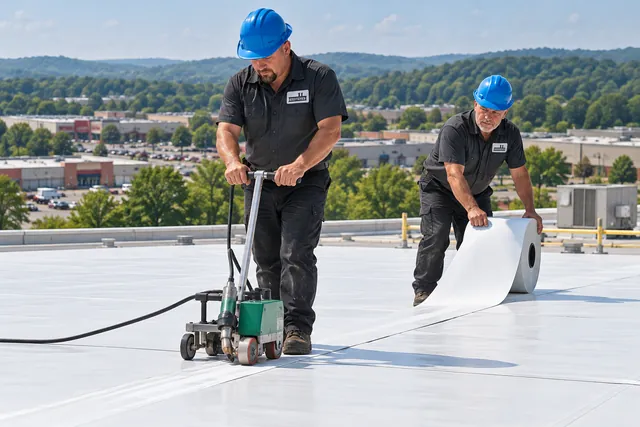
Hot-air welded white membrane over tapered boards, the usual replacement on flat warehouse, retail, and office roofs.
TPO Roofing details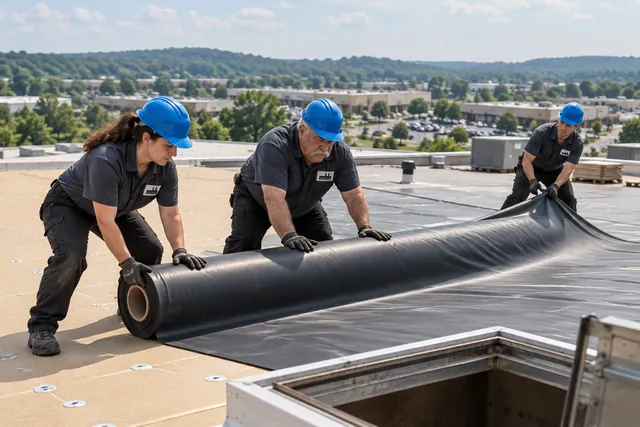
Taped rubber sheets anchored with securement strips, chosen for masonry buildings and roofs that move with the seasons.
EPDM Roofing detailsLow-slope tear-offs and recovers with drains, scuppers, edge metal, and parapet flashing rebuilt to the new height.
Flat Roofing details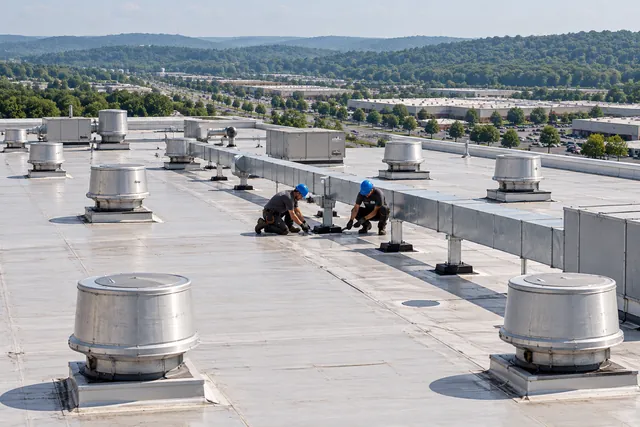
Exhaust-rated membranes, flashed expansion joints, and phased work over plants that keep running during the job.
Industrial Roofing details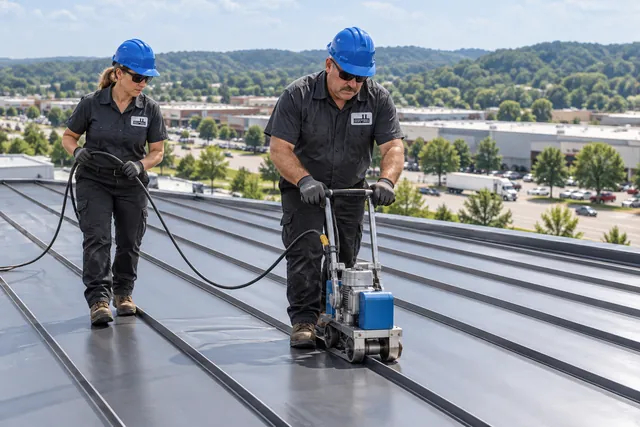
New standing seam or R-panel roofs, retrofit framing over flat roofs, and fastener and lap repair on existing steel.
Commercial Metal Roofing detailsStart from what you see on the roof today. The table points to the usual starting service for each situation.
| Roof Situation | Usual Starting Point | Why |
|---|---|---|
| One leak at a curb or drain, dry insulation | Commercial roof repair | The rest of the roof still has life |
| Worn single-ply on a clean flat roof | TPO roofing | Welded seams and a white surface over new taper |
| Older masonry building with parapets | EPDM roofing | Rubber flexes with the walls; strips anchor it |
| Ponding, blisters, or two roof layers | Flat roofing | Drainage and the recover limit come first |
| Grease, oil, or process exhaust on the roof | Industrial roofing | Resistant membranes go in discharge zones |
| Pitched roof, rusted laps, or a leaking flat roof to retire | Commercial metal roofing | Panels or retrofit framing shed water to gutters |
Describe the roof and the leak over the phone, or ask for a free inspection and we will sort it out on the roof.
Schedule Free InspectionRepairs and full replacements follow the same five stages, scaled to the size of the job.
The roof walk covers the field, every seam, curb, drain, scupper, and edge, plus cores where moisture is suspected. The deck underside is checked from inside the building.
You get a written recommendation: repair, recover, or tear-off, which system, and why. Photos tie each item to the spot on the roof where it was found.
The right permit office is matched to the town, and the HVAC contractor, tenants, and delivery schedules are lined up before the start date.
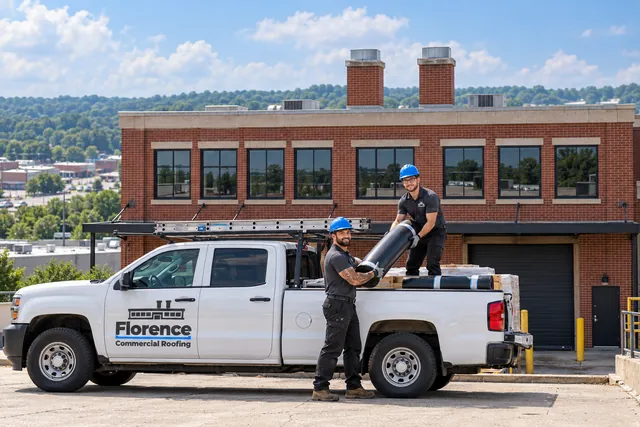
Repairs happen in a visit or two; replacements run section by section, each sealed before the crew leaves so the roof is watertight every night.
A closing walk covers seams, flashing, drains, and edges with you, and the photos and assembly details go into your building file.
Commercial roof replacement has no separate page here, so its five common questions are answered on this one.
Tear-off strips the roof to the deck; a recover adds insulation and membrane over the existing roof. Under the building code Kentucky adopts, a recover is ruled out when the old roof is water-soaked or already has two or more layers. Tear-off gives a full view of the deck, while a recover makes less debris and noise.
From the deck up: decking repaired where rusted or rotted, a vapor retarder on humid buildings such as pools or food plants, flat or tapered polyiso sized to the energy code, a gypsum or high-density cover board, the membrane or panels, then base flashing, counterflashing, coping, and drip edge.
They are replaced with the membrane on nearly every replacement, since the perimeter is where wind lifts a roof first and old flashing leaks. New edge metal sits at the new insulation height, sometimes on added blocking, and parapets get new base flashing, counterflashing, and coping sloped toward the roof.
Drains get new clamping rings, strainers, and extensions where the roof rises, with a tapered sump pulling water in. Scuppers get new metal boxes flashed into the membrane, overflow drains or scuppers sit a little above the primary ones, and gutters are resized when the taper changes where water reaches the edge.
Most do. Crews tear off only what they can dry in before leaving, protect the interior under open deck, control odors at RTU intakes during adhered work, time crane lifts outside busy delivery windows, and sign safety zones at doors. Offices and schools often move the loudest work to evenings or weekends.
Four questions that come up while owners weigh their options.
TPO, EPDM, and metal cover most of them, with PVC and modified bitumen for specific needs. Single-ply membranes fit flat warehouse, retail, and office roofs; standing seam and R-panel fit pitched shops, barns, and plants. PVC goes near grease or chemical exhaust, and roofs crowded with RTUs need walkway pads.
Late spring through fall, when surfaces stay warm enough for adhesives, primers, and sealants. Winter work still happens, since TPO welding and mechanically attached systems handle cold days better than adhered ones. Spring thunderstorms set the schedule day by day, so crews open only what they can seal before rain.
Roof size, the tear-off or recover decision, and detail work at curbs, walls, and edges matter more than the membrane. Each tear-off layer adds labor and hauling, wet insulation and deck repair add material, and every curb and pipe takes hand flashing. Cranes, height, and hatch locations add time, and the inspection measures each item.
Your electric bill names the utility for the address; East Kentucky Power Cooperative lists Owen Electric for Boone County. An electrician and your HVAC contractor disconnect units while curbs are set and flashed. If solar is planned, ask the utility about interconnection before the racking layout is fixed.
Tell us what the roof is doing and what sits under it. We will inspect it and send a free estimate for the right service.