
Commercial Metal Roofing
Standing seam and R-panel roofs, with flashing where panels end above a low-slope section.
Commercial Metal Roofing details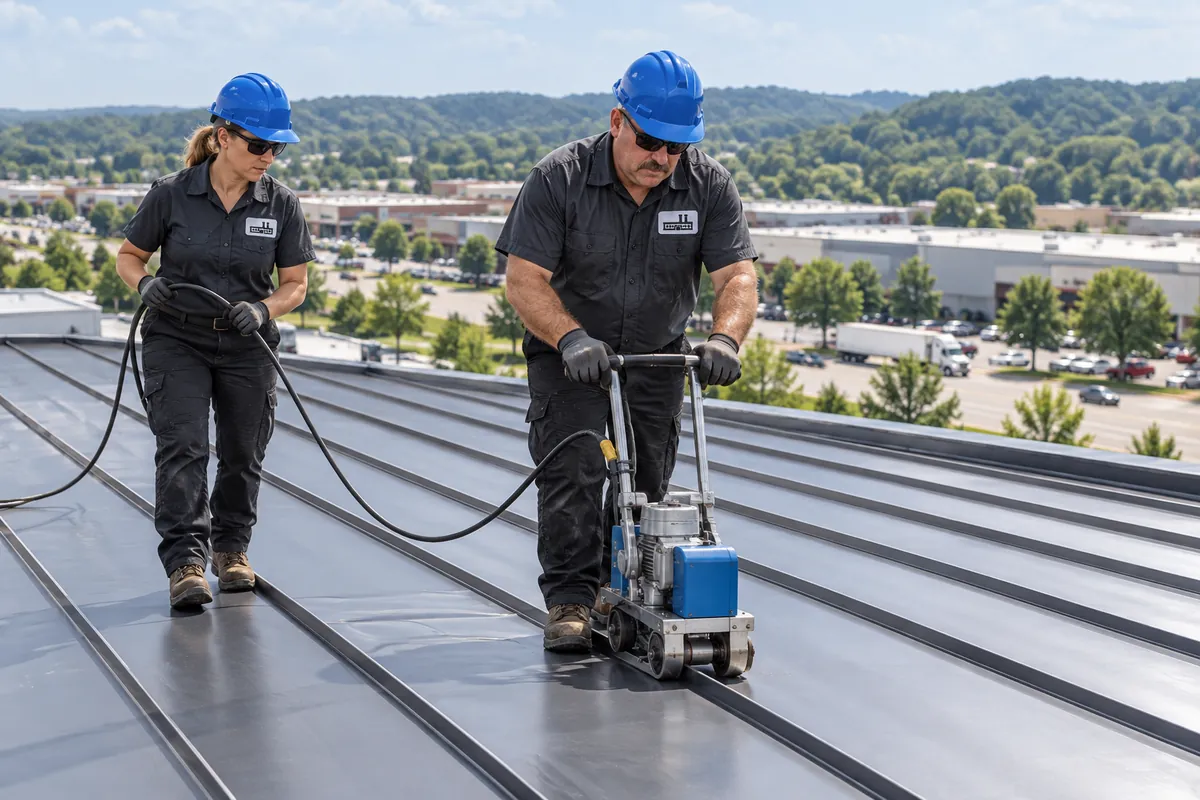
Commercial Roofing · Warsaw, KY
As a Warsaw commercial roofing contractor, we replace and repair commercial roofs in Gallatin County, including the tie-ins where flat and pitched sections meet.
A Warsaw commercial roofing contractor spends much of the inspection where one roof meets another. A low-slope section against pitched metal, an addition built onto an older building, or a new roof beside an old one each leaves a transition that water tests first.
Permits run through the Kentucky Department of Housing, Buildings and Construction, because the Gallatin County contact sheet names the state for commercial work. State plan review adds lead time, so drawings and product data go in early.
Transitions leak in a handful of ways. The chip on each shows how soon it needs work.
The joint between two roof areas built years apart moves differently on each side. Mismatched heights and aged flashing leave gaps that rain finds before anything else.
Where pitched panels drain onto a low-slope section, water lands hard on one strip of membrane. A cricket or a gutter and splash pad keep it from wearing through.
Base flashing up the taller wall needs counterflashing tucked into the masonry or a reglet. Sealant-only joints there crack after a few winters.
EPDM next to TPO, or mod bit next to metal, needs a transition product made for both. Tape or caulk alone at that joint seldom lasts.
Some buildings empty more than one roof area through a single scupper or gutter. When it clogs, water backs up across the transition.
Fog and heavy dew from the Ohio River keep decks wet on many mornings, which pushes adhered work and curb sealant later into the day.
Treating the transitions as part of the roof job pays off on the roof, inside, and in the schedule.
Tie-ins, crickets, and wall flashing are designed together, so water crosses from one roof to the next over a lap.
Each membrane meets its neighbor with a transition product both manufacturers accept, sealed to the panel or sheet.
Leaks along the line between old and new space stop once the roof transition above it is rebuilt.
Units disconnected for curb work are reset by the HVAC contractor before each roof area closes.
Drawings, product data, and edge details go to the state early, so plan review finishes before the start date.
Each roof area's system, age, and repairs are logged together, which helps when one section wears out sooner.
These three services cover most Warsaw roof jobs, from new metal to transition repairs.
Standing seam and R-panel roofs, with flashing where panels end above a low-slope section.
Commercial Metal Roofing details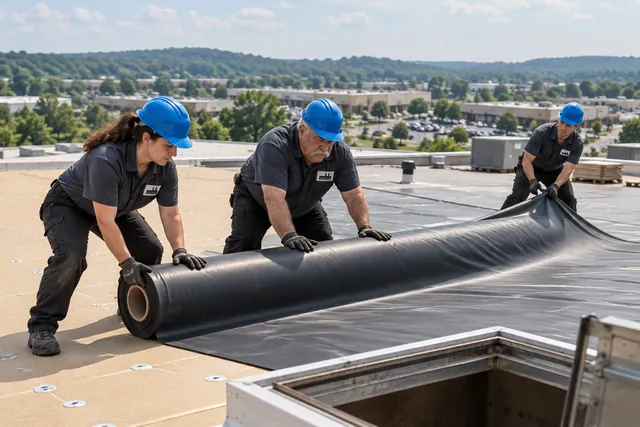
Rubber roofs on older buildings, tied into neighboring sections with primer and seam tape.
EPDM Roofing detailsLeak tracing and rebuilt flashing at transitions, walls, and shared scuppers.
Commercial Roof Repair detailsTransition leaks are found faster when both roof areas are walked together. Ask for a free inspection and estimate.
Schedule Free InspectionFive steps on a Warsaw roof where two sections meet.
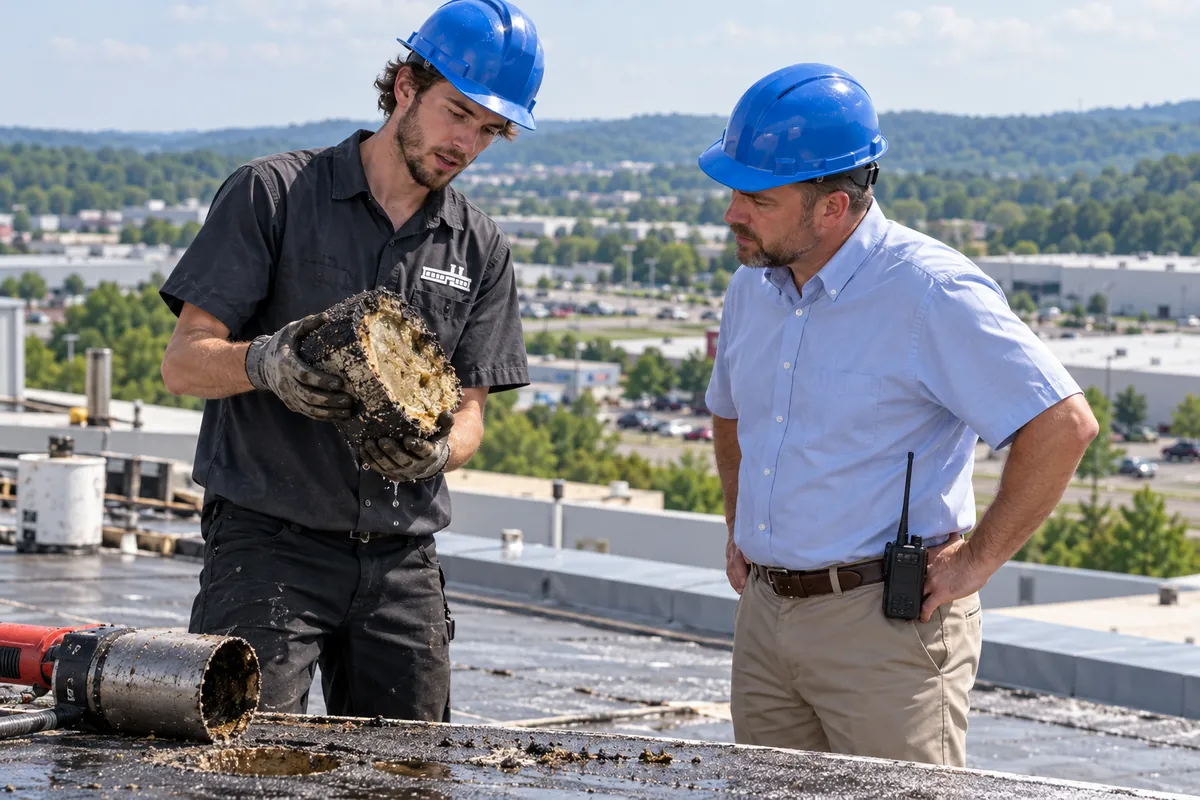
Both roof areas at the transition are walked, along with the wall flashing, valleys, and scuppers that serve them. Cores on each side show whether the insulation is dry.
The joint is designed for the two systems that meet there, with the lap set so the upslope roof always overlaps the downslope one.
Drawings, membrane or panel product data, and edge and flashing details go to the Kentucky Department of Housing, Buildings and Construction for plan review.
Old flashing at the transition comes off, wet insulation is cut out, and the new tie-in, cricket, and wall flashing go in with matching products.
A hose test along the joint and at the scupper below confirms water crosses over the lap and off the roof before the area is closed.
These towns get the same roofing services we bring to Warsaw. Building outside them? Call us or send us a message.
The main service city, covering warehouses, retail, and offices in Boone County.
Low-slope roofs behind parapets, where a thicker roof changes coping heights.
Distribution buildings with acres of membrane and drain grids to match.
Answers on state permits, tie-ins, and timing for Warsaw roofs.
Permits are the main difference: the Gallatin County contact sheet names the Kentucky Department of Housing, Buildings and Construction for commercial work, with no county inspector. State plan review adds lead time, so drawings and product data go in early. Fog and dew off the Ohio River also keep decks wet on many mornings, delaying adhered work and curb sealant.
Yes. The metal panels end on a flashing that laps over the membrane on the low roof, with a cricket or gutter taking water off the panels. Closures under the panel ends keep wind-driven rain out of the ribs, and the membrane runs up under that flashing.
Your HVAC contractor and electrician handle disconnecting units, and your electric bill names the utility for the address. East Kentucky Power Cooperative lists Owen Electric for Gallatin County, which matters if solar is planned on the new roof.
Earlier than a Boone County job, since state plan review sits ahead of the start date. Inspection, drawings, and product data come first, then the submittal, then scheduling for late spring through fall when adhesives and sealants cure best.
Older buildings mostly need more attention at walls, scuppers, and transitions, since they often carry several roof areas built at different times. The system choice still follows slope, drainage, and how the building is used.
Tell us which roof sections meet and where water gets in. We will inspect both sides and send a free estimate.